
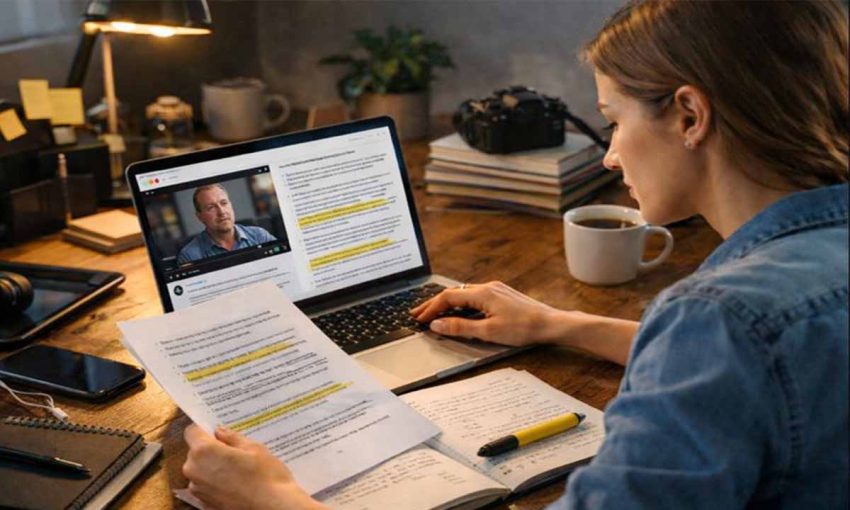
YouTube has quietly become one of the largest research libraries available to writers. Interviews, expert talks, product reviews, and long discussions live there in massive numbers. Many writers already rely on these videos for ideas and references. The problem is time. Sitting through a 40 minute video just to capture a few strong lines breaks focus and slows momentum.
That is where transcripts change the experience. Instead of passively watching, writers can read, scan, and extract exactly what they need. Tools that let you get YouTube transcript turn spoken content into searchable text. Once the words are visible on the page, research starts to feel lighter and more controlled. Speed improves, and the writing process feels less interrupted.
Quick Overview
Using transcripts allows writers to move from watching to reading. This makes it easier to scan for strong phrases, study how ideas unfold, and return to key sections without replaying video clips. By working with text instead of timelines, research becomes faster, notes become clearer, and early drafts take shape with less resistance.
Why video transcripts change the research workflow
Watching videos is linear. You start at the beginning and move forward minute by minute. Reading works differently. The eye jumps, pauses, and connects patterns quickly. With transcripts, writers can skim until something stands out, then slow down when a sentence carries weight.
This shift matters during research. Instead of guessing where a creator explains a key idea, you can search for exact phrases. Objections, hooks, and transitions become easy to spot. Spoken language often sounds more natural than polished articles, which helps writers study how people explain ideas in real time.
Many writers struggle with early-stage research because it feels scattered. Clear text reduces that friction. A solid grasp of copywriting basics shows why structure and clarity matter before drafting begins. Transcripts support that clarity by giving writers material they can shape, highlight, and revisit without mental strain.
From raw transcript to usable material
A transcript on its own is not ready for writing. Spoken content includes pauses, filler words, and repetition. That is normal conversation, but it can distract when you read it line by line. Cleaning and shaping the text helps writers stay focused on meaning rather than noise.
Different tasks also require different levels of detail. Sometimes you need a quick orientation. Other times you want full context. Clean transcripts support focused reading. Short summaries help you decide whether a source deserves attention. Longer summaries give enough background to write without reopening the video.
Writers also benefit from extracted quotes and grouped arguments. Seeing strong lines isolated from the rest of the conversation helps with tone study and credibility checks. This step turns raw speech into workable material instead of a wall of text.
Using summaries to reduce decision fatigue
One hidden cost of research is decision fatigue. Writers spend energy asking the same question again and again. Is this useful? Should I keep going? Do I need this source? Summaries help answer those questions early.
A brief overview can tell you whether a video fits your topic. Longer summaries allow deeper understanding without replaying the content. Grouped arguments highlight how ideas connect. Quotes preserve authentic language that can later be adapted into copy.
Examples of how writers turn transcripts into content show how spoken ideas can support blog posts and social writing without starting from scratch.
Turning transcript material into early drafts
Many writers get stuck between research and drafting. Notes sit in documents but never turn into paragraphs. Structured transcript outputs help bridge that gap. When ideas already appear in grouped sections, outlines come together faster.
Outlines reduce the pressure of starting from nothing. They give shape to thoughts before full sentences appear. Early drafts then feel like expansion rather than invention. This approach pairs well with techniques for breaking writer block, where lowering friction often matters more than forcing inspiration.
Drafts created this way should remain flexible. They are starting points, not finished pieces. Writers still refine voice, adjust flow, and add original perspective. The difference is that the page is no longer empty.
Practical uses for everyday writing
Transcripts support many writing tasks without forcing writers into a rigid process. A long explanation can become a blog outline. Step by step discussions often translate well into social threads. Opinion-heavy sections work for professional posts aimed at peers.
Short emotional moments can point to potential video clips or quoted sections. Longer explanations help writers understand pacing and buildup. Each use case starts with observation rather than automation. The transcript provides material, while the writer shapes the message.
This flexibility keeps the focus on craft rather than tools. Writers choose what to reuse and what to discard. Control stays in human hands.
Learning voice and persuasion from spoken language
Spoken language reveals things polished text often hides. Pauses show emphasis. Repetition shows priority. Transitions reveal how speakers guide listeners through ideas. Transcripts allow writers to slow down and study these elements closely.
Verbal persuasion follows a different rhythm than edited prose. Speakers often build trust through tone before logic. Studying how hooks open conversations and how closings land helps writers improve structure without copying words. Developing a consistent copywriting tone becomes easier when writers study how real speech flows.
This study sharpens judgment. Writers learn when to tighten language and when to let it breathe.
Why reading transcripts supports better learning
Reading gives writers control over pace. They can pause, reread, and annotate without losing their place. Text also supports memory because ideas stay visible, which encourages active engagement rather than passive intake.
Educational models such as the simple view of reading explain how written language strengthens understanding by combining decoding with comprehension. When writers read instead of only listening, they process ideas more deliberately and retain meaning more effectively.
For writers, this turns research time into learning time. Each transcript builds clarity and understanding instead of draining attention.
A calmer and faster way to work
Using transcripts does not replace thinking. It removes friction. Writers spend less time searching and more time shaping ideas. Video becomes reusable material rather than a time commitment.
When research feels lighter, writing becomes more consistent. Transcripts turn spoken words into a resource that supports clarity, pacing, and judgment. Speed improves because attention stays where it belongs, on the words themselves.