
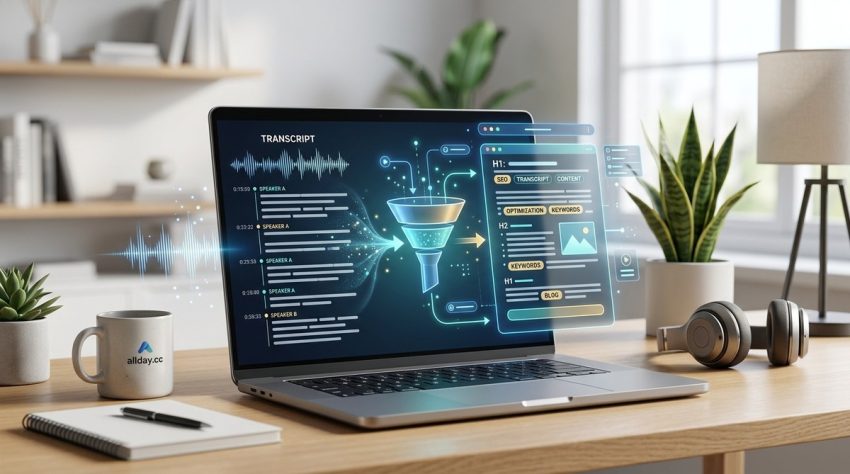
Transcripts are not just a verbatim record of what was said. When used effectively, they become a gold mine for SEO content, helping your pages rank higher, answer real questions, and keep readers and listeners engaged longer. At allday.cc we explore copywriting fundamentals and smart marketing tactics that turn everyday transcripts into powerful content assets. In this guide you will find practical steps, actionable templates, and proven tactics to transform transcripts into blog posts, FAQs, landing pages, and more you can use today.
Why Transcripts Matter for SEO
Transcripts do more than improve accessibility. They provide a full, searchable map of your topic that search engines can crawl and index. Here is why transcripts deserve a prominent place in your content strategy:
- They create indexable content from spoken word. Search engines read text, not audio. A clean transcript turns audio into a dense text asset your pages can rank for.
- They reveal long tail and semantic search opportunities. Transcripts cover a wider range of phrases than a single blog post might, capturing questions and variations users actually search.
- They boost on page engagement and dwell time. When readers skim or dive into relevant sections of the transcript, they stay longer on the page and are more likely to convert.
- They support repurposing across formats. A well structured transcript becomes the backbone for blog posts, FAQs, social snippets, guides, and even chatbot dialogue.
In short, transcripts are a backbone asset for your SEO toolbox. If you can shape them into a well organized, user friendly page, you unlock a scalable path to rankings and conversions.
The Core Benefits of Turning Transcripts into SEO Content
- Higher crawlability and indexation for long form topics
- Rich source of keywords and semantic clusters
- More opportunities for internal linking and content silos
- Accessible content that meets accessibility standards
- A fast, repeatable workflow for future episodes and webinars
- Clear material for A/B testing headlines, intros, and conclusions
If you are building a content machine, transcripts are your multi purpose fuel. They feed blog posts, knowledge bases, product pages, and even chatbots with a consistent voice and structure.
Step by Step: Turn any Transcript into High Ranking Content
Below is a practical, repeatable process you can apply to podcasts, webinars, and filmed interviews. The goal is to produce an SEO friendly asset that readers and search engines love, while preserving the natural voice of your source material.
Step 1: Content Analysis and Keyword Extraction
- Scan for core topics. Identify the central themes that recur across the transcript.
- Highlight user intent signals. Look for what problems listeners are trying to solve and phrases that indicate intent.
- Extract candidate keywords and phrases. Include primary keywords, long tail variants, and semantic relatives.
- Note speakers and context. Mark who says what to preserve structure when you convert to sections.
- Create a quick topic map. Group phrases into clusters that can become sections or subtopics.
Tools you can use:
– Keyword research tools to find search volume and difficulty
– Text analysis tools to surface synonyms and semantic variants
– A simple highlighter or note taking app to capture recurring ideas
Tip: Don’t chase every keyword from the transcription. Prioritize terms that align with user intent and your content goals. Balance quantity with quality.
Step 2: SEO Optimized Structure Development
- Create a clean information architecture. Decide on a strong H2 skeleton that mirrors the main topics in the transcript.
- Map H3 subtopics to transcript sections. Use natural speaking breaks to define subheads.
- Draft a working outline before writing. This keeps the voice coherent and eliminates circulars.
- Include an FAQ section if the transcript reveals common questions. This is a powerful way to capture voice search and featured snippet opportunities.
Structure example:
– Introduction (short, benefit driven)
– Section 1: What is [topic]
– Section 2: Why it matters
– Section 3: How to implement
– Section 4: Common pitfalls
– FAQ
– Conclusion and next steps
Remember, the title and meta description should reflect the page focus. The H1 is your page title pushed by your CMS, so your H2s and H3s should deliver clarity and momentum for the reader.
Step 3: Content Creation and Optimization
- Write in a natural, human tone. The transcript provides authentic voice, but adapt for readability.
- Rewrite around the transcript. Paraphrase where needed to improve flow, but preserve meaning and quotes when appropriate.
- Integrate keywords organically. Avoid stuffing. Use variations in headings and natural usage in body text.
- Add value through expert insights. Include examples, frameworks, and practical steps.
-
Include concrete callouts and numbers. People trust concrete steps and measurable tips.
-
Optimize meta elements:
- Meta title and meta description tailored to the page topic.
- Use actionable language and a clear value proposition.
-
Include a target keyword in the title and naturally in the description.
-
Add internal links. Connect to related posts, guides, or product pages to strengthen your content ecosystem.
- Include structured data where relevant:
- FAQPage schema for your questions
- Article schema for the blog post
- VideoObject schema if you publish a video version
Step 4: Publication Details and Internal Linking
- Create descriptive URLs. Use a short slug that reflects the main topic.
- Use a strong introduction paragraph that hooks the reader and sets expectations.
- Break content into readable blocks. Use short paragraphs, bullet lists, and numbered steps for scannability.
-
Add internal links to related resources. This helps with topic authority and better crawlability.
-
Craft a strong conclusion that reinforces the main benefit and invites action. A well crafted conclusion can improve dwell time and conversions.
Step 5: Promotion and Testing
- A/B test headlines and sub headlines. Small changes in wording can shift click through rates.
- Test different meta descriptions for click through rate impact.
- Monitor engagement metrics. Watch for bounce rate, time on page, scroll depth, and conversions.
- Iterate based on data. Update sections that underperform and refresh information periodically to keep content current.
The combination of a solid structure, high quality transcription based content, and data driven testing will give you a scalable system for turning transcripts into SEO content that performs.
Best Practices for Different Formats
Transcripts can be transformed into a variety of content formats. Here are best practices for common use cases.
Blog posts from transcripts
- Use the transcript as a backbone, but write a narrative flow. Start with a compelling hook, provide context, and lead into practical takeaways.
- Break the post into themed sections. Each section should map to a subtopic from the transcript.
- Add visuals and examples. Screenshots, diagrams, or quick case studies increase engagement and comprehension.
- Include an actionable conclusion. End with practical steps and a prompt for comments or a CTA.
- Optimize internal links and related posts. Create a content hub around the topic.
FAQ pages from transcripts
- Turn questions and answers from the transcript into a well structured FAQ.
- Use schema.org FAQPage to help search engines show rich results.
- Keep answers concise and actionable. If needed, add a short step by step process.
- Link to deeper resources for readers who want more detail.
Landing pages from transcripts
- Focus on one primary KPI. A landing page should quickly communicate value and drive conversion.
- Use the transcript to identify benefits and objections to address in the copy.
- Use strong social proof and a clear call to action.
- Keep the page scannable with bullets and short paragraphs.
YouTube and video SEO from transcripts
- Create a chapter or timestamped outline. This helps both users and search engines understand the structure.
- Integrate keywords naturally in the video description and transcripts.
- Use the transcript to build upper and lower funnel content such as blog posts and guides.
- Add alternate text for accessibility and improve engagement.
Podcast transcripts to blog posts
- Treat the podcast as a source of expert insight. Convert the content into a structured article with a clear argument.
- Use quotes strategically. Pull key quotes for social sharing and call out boxes.
- Build a companion resource. Create a summary, an actionable checklist, and an FAQ derived from the episode.
Automation and Human Touch
Automation can speed up the process of turning transcripts into SEO content, but humans should still curate. A few automation friendly practices:
- Auto generate draft posts from transcripts, then assign editors to refine for tone and flow.
- Use AI to extract structure and topics, but ensure final copy aligns with your brand voice.
- Employ templates for consistency while preserving voice.
The human touch matters for readability, empathy, and the ability to connect with readers. The best results come from a balanced approach where automation handles grunt work and humans handle nuance.
Common Pitfalls to Avoid
- Over stuffing keywords into the transcript based content. This harms readability and may trigger penalties.
- Relying on auto captions alone without cleanup. Transcripts often contain errors and misattributions.
- Missing internal linking opportunities. A lack of related content reduces topic authority.
- Inconsistent formatting. Skim readers will jump away if headings and structure are unclear.
- Ignoring accessibility. Ensure transcripts are properly formatted with readable typography and alt text where needed.
Tools and Tactics
- Use transcription quality checks. Ensure speaker labels are clear, times are accurate, and errors are corrected.
- Leverage keyword mapping templates. Map transcript sections to target keywords and intent.
- Create a content style guide. Maintain tone, voice, and formatting across transcripts to content assets.
- Employ content calendars. Schedule transcript based content creation around episodes and webinars.
- Use A/B testing for headlines, intros, and CTAs. See which variants perform best with your audience.
- Implement internal linking strategies. Build topic clusters and pillar pages that reinforce authority.
- Use schema markup. FAQPage, Article, and VideoObject can help search engines understand your content.
Crafting Human Like Chatbot Dialogue from Transcripts
Transcripts can also seed chatbot dialogue that feels natural and helpful. Here is how to repurpose transcripts into conversational content:
- Extract common questions. These can seed FAQ style responses for a chatbot.
- Create short, human friendly replies. Use concise language that mirrors your brand voice.
- Build decision trees from topic flows. Map user intents to appropriate responses and next actions.
- Include help links and resources. Provide a path to deeper information within your site.
This approach helps your chatbot deliver value that matches the expectations of users who discovered your content through transcripts.
Real World Example: Transcripts to SEO Content in Practice
Let us walk through a hypothetical example to illustrate how this process looks in action.
- Transcript topic: A webinar on productivity and writing speed.
- Step 1: Analyze for keywords such as “writing productivity”, “speed writing techniques”, “transcripts for workflow”.
- Step 2: Build a structure:
- H2: Why writing speed matters
- H2: Techniques to accelerate writing
- H3: The power of planning with outlines
- H3: Using transcripts to surface quick wins
- H2: Tools and templates
- H2: Common mistakes and how to avoid them
- FAQ: How can I apply these techniques daily?
- Step 3: Write a blog post grounded in the transcript but with a clear introduction, body, and conclusion.
- Step 4: Optimize with a compelling meta description, internal links, and a FAQ section.
- Step 5: Promote via social and repurpose into a short checklist and a chatbot dialogue.
This approach preserves the authenticity of the original talk while delivering a structured, SEO friendly page.
Final Thoughts and Next Steps
Turning transcripts into SEO content is a scalable, repeatable process that boosts search visibility and reader engagement. The transcript is more than a memory of a conversation; it is a functional asset with the potential to create a content ecosystem around topics your audience cares about. By analyzing, structuring, and optimizing transcripts with an eye toward user intent and search engine visibility, you can unlock consistent growth across blog posts, FAQs, landing pages, and multimedia assets.
If you are ready to start using transcripts to fuel your SEO strategy, consider this practical checklist:
- Begin with a quick transcript audit to identify themes and intent
- Build a clean, topic driven structure with clear H2s and H3s
- Extract and map keywords to sections and questions
- Produce a publish ready draft that balances readability and optimization
- Optimize metadata and implement schema where relevant
- Link to related content and create a content hub around the topic
- Test headlines and CTAs, then iterate based on data
Transcripts are a powerful bridge between spoken communication and written content. With a purposeful process, you can turn every transcript into an SEO content asset that resonates with readers and search engines alike. For more insights on copywriting fundamentals and smart marketing strategies, keep exploring the resources at allday.cc, where we share practical, human centered approaches to writing and marketing that actually work.